.jpg)
FTSE 100 vs FTSE 250: Comparing Ethnic Diversity Progress Across Top UK Companies

Top UK businesses are making visible progress on ethnic diversity at the highest levels. According to the latest Parker Review report, board representation for ethnic minorities has reached historic highs across Britain. However, comparing blue chip giants in the FTSE 100 with medium enterprises in the FTSE 250 reveals distinct differences in momentum.
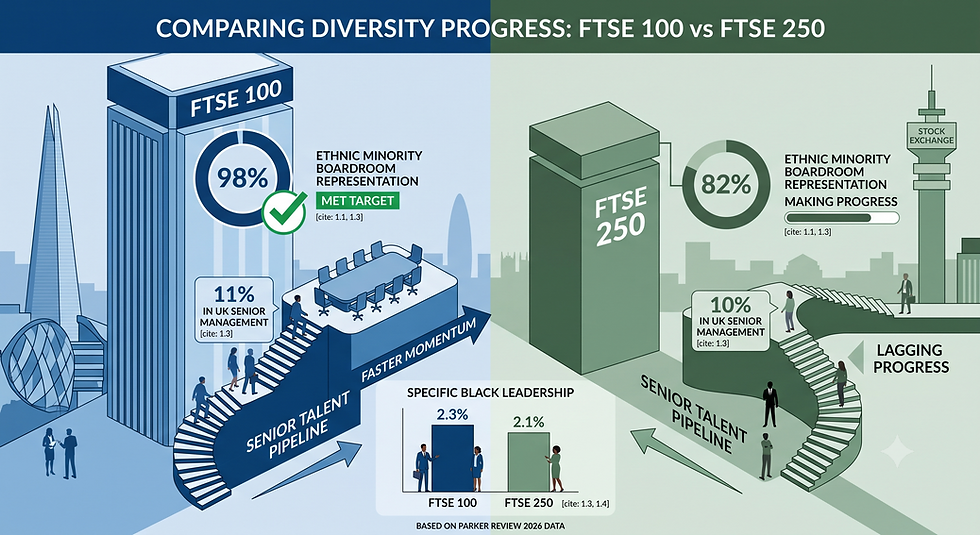
Boardroom Progress: FTSE 100 Leads While FTSE 250 Follows
FTSE 100 companies have largely hit their board diversity targets. A massive 98 percent of FTSE 100 boards now include at least one ethnic minority director. This is a dramatic rise from just 52 percent in 2019. Ethnic minority directors now hold 20 percent of all FTSE 100 board seats.
The FTSE 250 index shows solid growth but still lags behind. Currently 82 percent of FTSE 250 boards have met the target of at least one minority director. Ethnic minority directors account for 16 percent of directorships across the FTSE 250. While this is up from 22 percent in 2019, mid cap companies are progressing at a slower pace.
Why FTSE 250 Companies Face Tougher Diversity Obstacles?
FTSE 250 businesses encounter structural hurdles that FTSE 100 companies rarely face. First, FTSE 250 boards are typically smaller in size. Smaller boards mean fewer total seats and slower overall turnover.
Second, FTSE 250 firms are usually more domestic and UK focused. They often lack the multinational operations and broad global recruitment networks of FTSE 100 corporations.
Finally, heightened cost awareness means FTSE 250 leaders prefer organic rotation over adding new board seats.
The Senior Management Pipeline Gap:
Board seats tell only part of the story. The talent pipeline below the board level presents a far tougher challenge. In the FTSE 100, ethnic minority professionals hold an average of 11 percent of UK senior management roles.
In the FTSE 250, that figure drops slightly to 10 percent.
Both indexes remain far behind their 2027 targets for executive representation. Without a healthy internal pipeline, keeping boards diverse will become increasingly difficult over time.
The Hidden Reality for Black Leaders Across Both Indexes:
Broad ethnic diversity numbers mask a serious problem for Black talent. The latest data shows that progress for Black professionals has actually stalled or regressed.
In the FTSE 100, Black directors hold only 2.3 percent of board seats. This fell from 25 seats down to 24 seats over the past year.
Inside the FTSE 250, Black directorships dropped from 42 seats to 37 seats, moving representation down to 2.1 percent. At the senior management level in FTSE 100 companies, Black professionals occupy just 1.3 percent of roles. This is well below their 3.9 percent share of the UK working age population.
Building Genuine Equity Beyond Boardroom Numbers
Hitting target percentages at the board level is a necessary start. However, real equity requires fixing talent progression at every level of corporate structure. Companies across both the FTSE 100 and FTSE 250 must track specific data for Black representation. Organizations need active sponsorship programs, transparent hiring standards, and strong executive accountability to build lasting change.


Comments